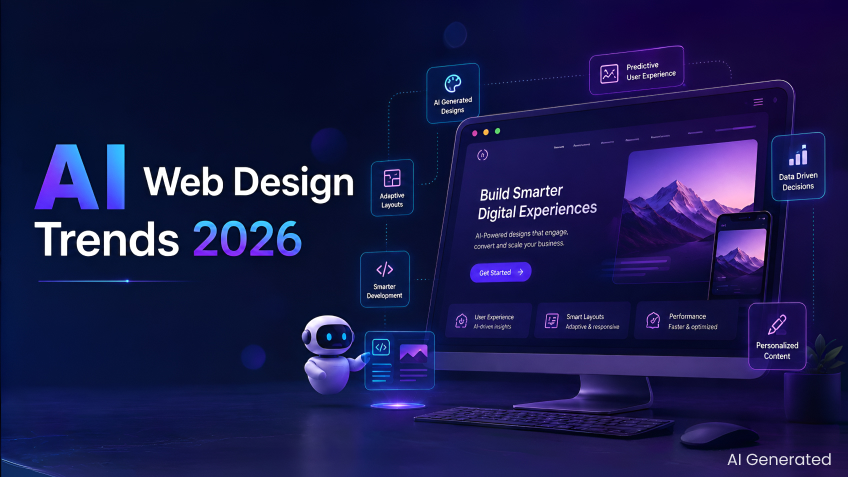
AI Web Design Trends 2026: What Businesses Need to Know
01 Jun, 2026



A business website does much more than just introducing a company and display its services. It helps its visitors find information, make decisions and in the process help in customer acqusition. Yet many websites today still rely on static content, generic user journeys and manual processes that do little to respond to individual visitor needs.
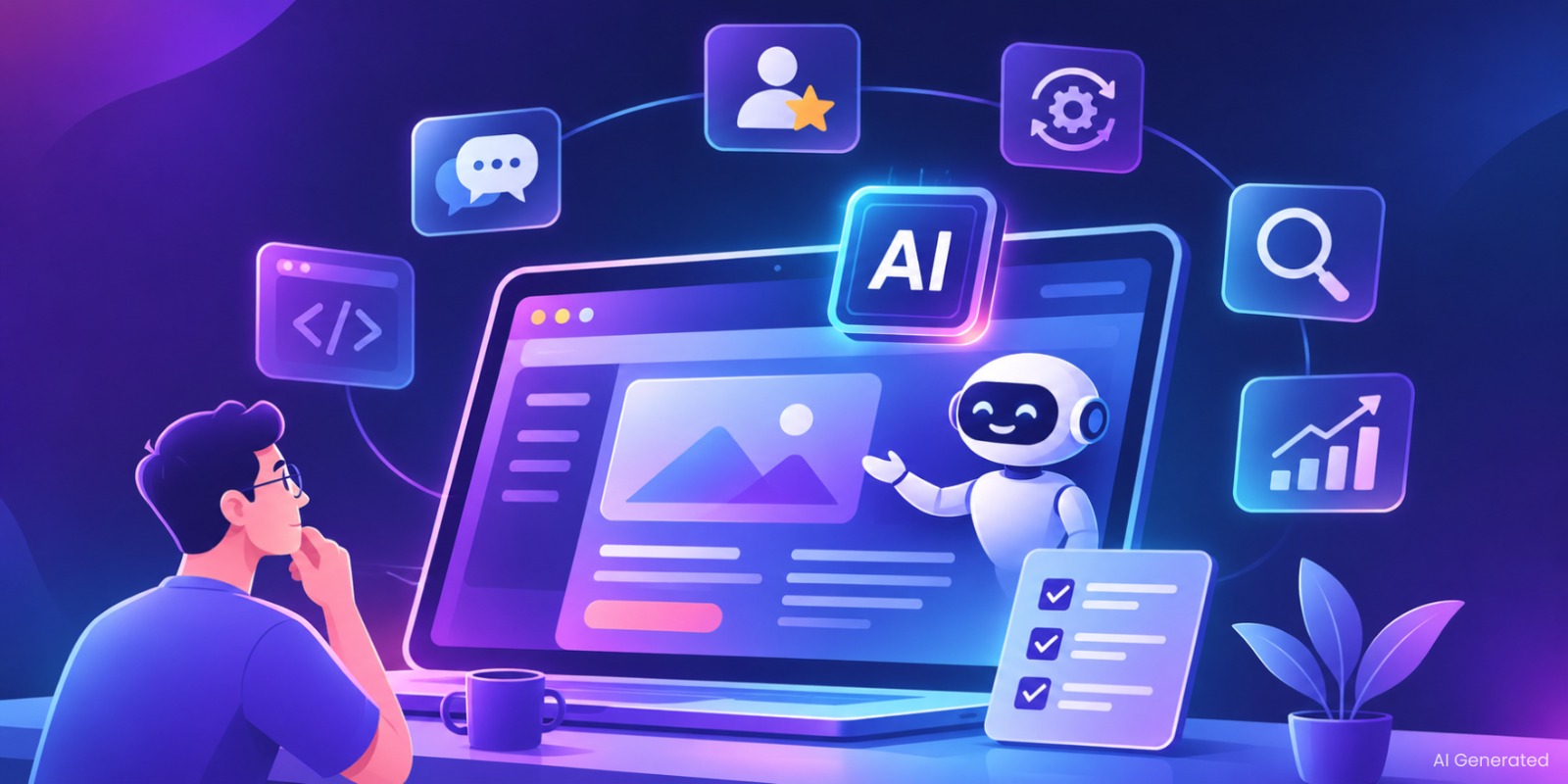
This is where AI website development creates new and exciting opportunities. By combining artificial intelligence with modern web technologies, businesses can build more responsive, personalised and efficient experiences. Intelligent chatbots, personalised recommendations, and automated workflows can make websites today more useful while helping teams manage routine operations.
However, successful implementation involves more than adding an AI feature. It starts with understanding user needs, choosing the right use cases and building a reliable experience around them.
Traditional websites generally rely on predefined content and fixed user journeys. AI-powered websites can introduce features that respond to visitor behaviour, questions and changing requirements.
- Intelligent assistance: AI chatbots can answer common questions, guide visitors and help them navigate services.
- Personalised experiences: Recommendation systems can present relevant products, content or services based on visitors' preferences and interactions.
- Automated workflows: AI can support lead qualification, appointment scheduling, enquiry management and other repetitive tasks.
- Smarter search: Natural language search can help visitors find information using everyday questions rather than exact search terms.
- Content assistance: AI tools can support content organisation, summarisation and the delivery of relevant customer information.
These features can make websites more interactive, but their usefulness depends on how well they are implemented and the quality of the information they use.
1. Create More Relevant User Experiences
Not every visitor arrives with the same goal. A first-time visitor may need an introduction to your services, while a returning customer might be looking for support or a specific product.
AI can help websites respond to these different needs through personalised recommendations, contextual assistance and more relevant navigation. These features can reduce unnecessary steps and make important information easier to access.
2. Improve Customer Support and Engagement
AI-powered chatbots can address common questions, provide general guidance and direct visitors to relevant resources. They can also collect enquiry details before passing more complex requests to a human representative.
The aim is not to replace human support entirely. Instead, automation can handle routine interactions, allowing employees to focus on situations that require judgement, expertise or personal attention.
3. Automate Repetitive Business Processes
Website enquiries often involve manual follow-ups, data entry and coordination. AI integrations can connect website interactions with CRM platforms, internal systems and workflow tools.
For example, a service business could automatically categorise incoming enquiries, identify their requirements and route them to the appropriate team. This can reduce repetitive work and make enquiry management more organised.
4. Make Website Search More Useful
Visitors are not always familiar with the exact terminology used on a website. AI-assisted search can interpret natural language queries and identify relevant information across available content.
For businesses with extensive service catalogues, product libraries or knowledge bases, this can make information easier to find and improve the browsing experience.
5. Support Better Business Decisions
Website analytics can show which pages visitors explore, where they spend time and where they leave the journey. AI-assisted analysis can help identify patterns and highlight areas that deserve further investigation.
These insights should still be checked against actual performance metrics. Automated recommendations are useful starting points, not guarantees of better results.
Step 1: Identify the Problem
Start with a genuine user or operational challenge. This could be slow enquiry handling, difficult site navigation or a high volume of repetitive support questions. Choose a use case where AI can provide a clear benefit.
Step 2: Review Your Data and Infrastructure
Check whether your existing website data is accurate, accessible and suitable for the intended application. Consider how the new feature will connect with your CRM, databases and other business systems.
Step 3: Choose the Right AI Tools
Select technologies based on the task, integration requirements, budget and expected performance. Not every website needs a custom AI model; an existing service or focused automation may be more practical.
Step 4: Prioritise Security and User Experience
Establish appropriate privacy, security and access controls. Make AI features easy to use, explain their limitations and provide a route to human assistance when automated systems cannot resolve a request confidently.
Step 5: Test, Measure and Improve
Evaluate the feature for accuracy, response quality, reliability and its ability to handle unexpected inputs. Monitor user feedback and business metrics after launch, then make improvements based on what the data shows.
Search visibility also needs attention. AI-generated website content should remain useful, accurate and original. Google recommends prioritising people-first content rather than publishing large volumes of automatically generated pages without meaningful value.
Building an AI-powered website requires coordination between design, development, data and business strategy. The right website development company should understand your existing infrastructure, recommend suitable technologies and build around real user requirements.
At Nine Triangles, our Technology Lab focuses on website development, application development, custom digital platforms and AI-powered solutions. We bring together technical development and user experience considerations to help businesses explore practical ways of integrating intelligent capabilities into their digital platforms.
A development partner with experience in both conventional web technologies and AI applications can also help plan integration, testing, maintenance and future improvements.
AI can move business websites beyond static information platforms towards more interactive and useful digital experiences. But adding technology without a clear purpose can create complexity rather than value.
The most effective approach is to start with a real need, choose appropriate use cases and measure their impact after implementation. With thoughtful planning and the right development expertise, businesses can build websites that are more responsive, adaptable and prepared for changing customer expectations.
With strategy and insights at the core, we seamlessly integrate creative, technology, video, SEO, and performance marketing to deliver projects on time and within budget. That's why clients of all sizes and industries trust us for their most diverse and dynamic needs.



















We combine the agility of a mid-sized agency with the strategic depth of a consulting partner. Every project starts with a business lens - focused on outcomes, not just outputs.
In short, we are not just a digital agency. We are your digital growth partner.
We are all three - by design.
Our model is built to support modern business needs through integrated services across strategy, design, technology, and performance marketing. We help you define the problem, build the solution, and scale the impact.
We complement, not compete.
Think of us as your extended team - brought in for specific expertise, overflow capacity, or to scale faster. Whether it is UX strategy, campaign content, full-stack development, or performance marketing, we plug in where it matters most.
We work across markets and time zones.
Our teams are based in India, but we have delivered for clients in the Middle East, Europe, the US, Southeast Asia, and beyond. We adapt our workflows to suit your region, your rhythm, and your goals.
Simple - just reach out.
We will begin with a conversation to understand your needs and identify how we can support you. From there, we tailor the right approach - whether it is a quick sprint or a long-term roadmap.
© 2026 All Rights Reserved