How to Leverage Google Trends for Smarter SEO Strategies
30 Dec, 2024

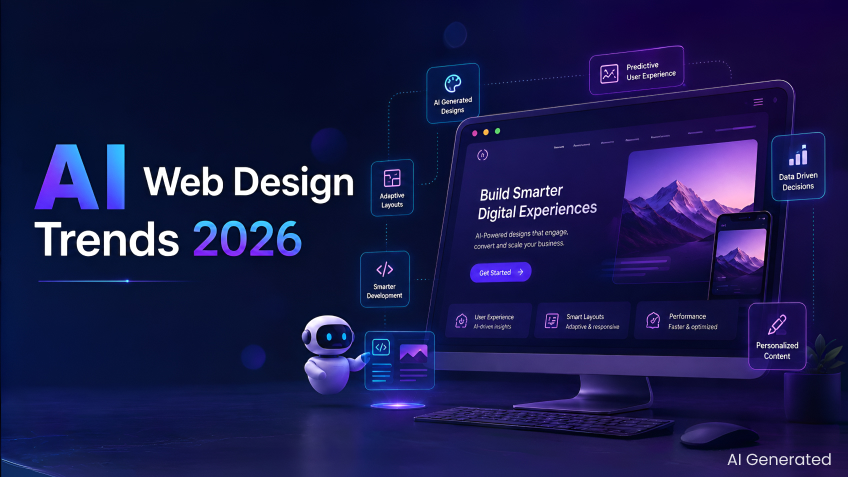


Web design is evolving faster than ever, and artificial intelligence is becoming one of the biggest drivers behind that transformation. Businesses are no longer using AI only for automation or analytics. It is now influencing how websites are designed, personalized, optimized, and maintained.
According to recent web design trend reports, AI-powered personalization, conversational interfaces, accessibility-focused design, and predictive user experiences are expected to play a major role in shaping websites in 2026.
As customer expectations continue rising, businesses need websites that deliver faster experiences, smarter interactions, and stronger engagement. This shift is increasing the demand for modern AI web design strategies that combine intelligent technology with user-focused design principles.
Traditional websites depend heavily on static designs and a typical user experience. Modern-day consumers require websites that understand their preferences, provide relevant information quickly, and ensure smooth navigation across devices.
AI enables businesses to analyze visitor behavior, identify engagement patterns, and optimize websites using real user data. Brands no longer need to make assumptions; instead, they can create digital experiences tailored to customers' needs.
This evolution is redefining not just user experience, but also the ways businesses plan websites and create content strategies. As we look ahead, it's crucial to understand the emerging trends that will shape web design in 2026.
One of the key trends is 2026 AI-based personalization. Websites are significantly adapting recommendations, content, and user journeys based on visitor behavior and preferences.
Rather than giving every visitor the same experience, businesses can use personalization to improve user interactions and conversions. AI-driven personalization is a key advantage for digital brands.
AI is currently integrated into modern design platforms to create layouts, help place content, and make user experience recommendations.
Although innovation is still reliant on humans, the use of AI website design software helps detect usability problems, make design enhancements, and improve efficiency in website development. This enables businesses to launch more efficiently optimized websites with consistent design quality.
AI-enabled chats are evolving to be more sophisticated and incorporated into website design. Many businesses are now increasingly using conversational capabilities to provide answers and guidance for customer support.
Several industry professionals anticipate that conversational user interface is going to become a prominent web design trend as AI interactions take over conventional navigation.
AI can analyze behavioral patterns of users and determine where users would be most inclined to leave a website or abandon a process.
This will enable organizations to improve the design of landing pages, navigation structures, and the flow of conversion through real behavior rather than assumptions. Predictive UX has been helping brands in creating more seamless experiences for their customers.
Accessibility is not an option but is becoming an essential requirement. Using artificial intelligence applications, businesses can ensure that any accessibility issues are solved while making their application user-friendly and compliant with all necessary standards.
Some elements that contribute to website accessibility include image descriptions, voice guidance, and adaptive interfaces.
Content remains one of the key components of a successful website's functioning. Companies have begun using artificial intelligence technologies during website creation to analyze consumer activity and properly organize the content.
This improves website performance in terms of readability and user engagement through non-manual testing.
AI is projected to be a common component of website strategy within the coming years. Companies that begin adopting these trends now will be able to position themselves well to improve engagement, build customer experience, and remain competitive in a rapidly changing digital landscape.
With the continued development of such technologies, companies are opting to seek professional web design services who know how to integrate artificial intelligence with effective design principles. The companies that will adopt this shift early on will be better equipped for the future of online experience.
AI is reshaping how websites are designed, optimized, and personalized in 2026. From predictive user experiences and conversational interfaces to accessibility-focused design and AI-powered personalization, businesses are increasingly adopting intelligent technologies to create faster, smarter, and more engaging digital experiences.
AI can help small businesses develop personalized websites, automate updates, analyze user behaviors, and improve user experience without requiring an extensive team.
Most industries can take advantage of AI-powered features, but the approach will have to be customized according to the demands of the users and specific industry goals.
No. While artificial intelligence would automate tedious work and give out design suggestions, human designers are necessary for their creative and strategic skills.
With strategy and insights at the core, we seamlessly integrate creative, technology, video, SEO, and performance marketing to deliver projects on time and within budget. That's why clients of all sizes and industries trust us for their most diverse and dynamic needs.



















We combine the agility of a mid-sized agency with the strategic depth of a consulting partner. Every project starts with a business lens - focused on outcomes, not just outputs.
In short, we are not just a digital agency. We are your digital growth partner.
We are all three - by design.
Our model is built to support modern business needs through integrated services across strategy, design, technology, and performance marketing. We help you define the problem, build the solution, and scale the impact.
We complement, not compete.
Think of us as your extended team - brought in for specific expertise, overflow capacity, or to scale faster. Whether it is UX strategy, campaign content, full-stack development, or performance marketing, we plug in where it matters most.
We work across markets and time zones.
Our teams are based in India, but we have delivered for clients in the Middle East, Europe, the US, Southeast Asia, and beyond. We adapt our workflows to suit your region, your rhythm, and your goals.
Simple - just reach out.
We will begin with a conversation to understand your needs and identify how we can support you. From there, we tailor the right approach - whether it is a quick sprint or a long-term roadmap.
© 2026 All Rights Reserved